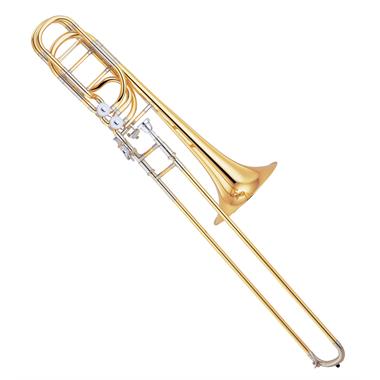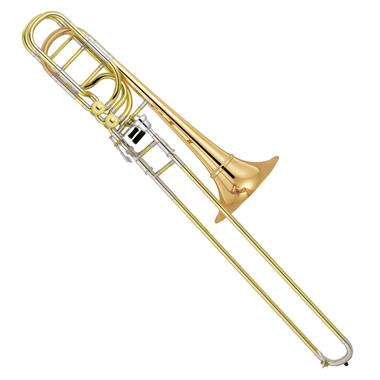
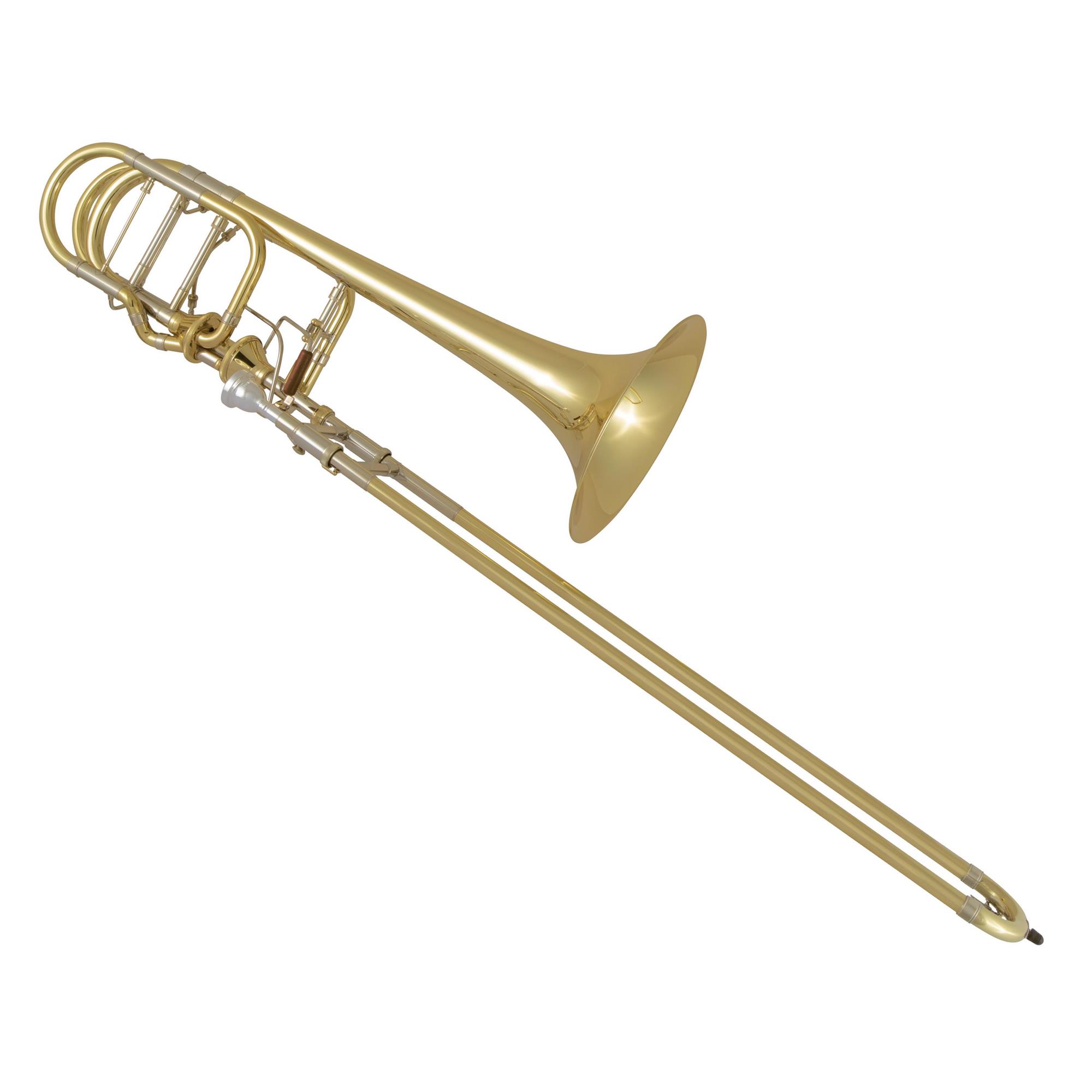


Vincent Bach 50AF3 double-rotor bass trombone
Vincent Bach https://www.rosehillinstruments.co.uk/p/50AF3/bass-trombones/vincent-bach/vincent-bach-50af3-double-rotor-bass-trombone£ £8,000.00
Ref: 50AF3
0 in stock
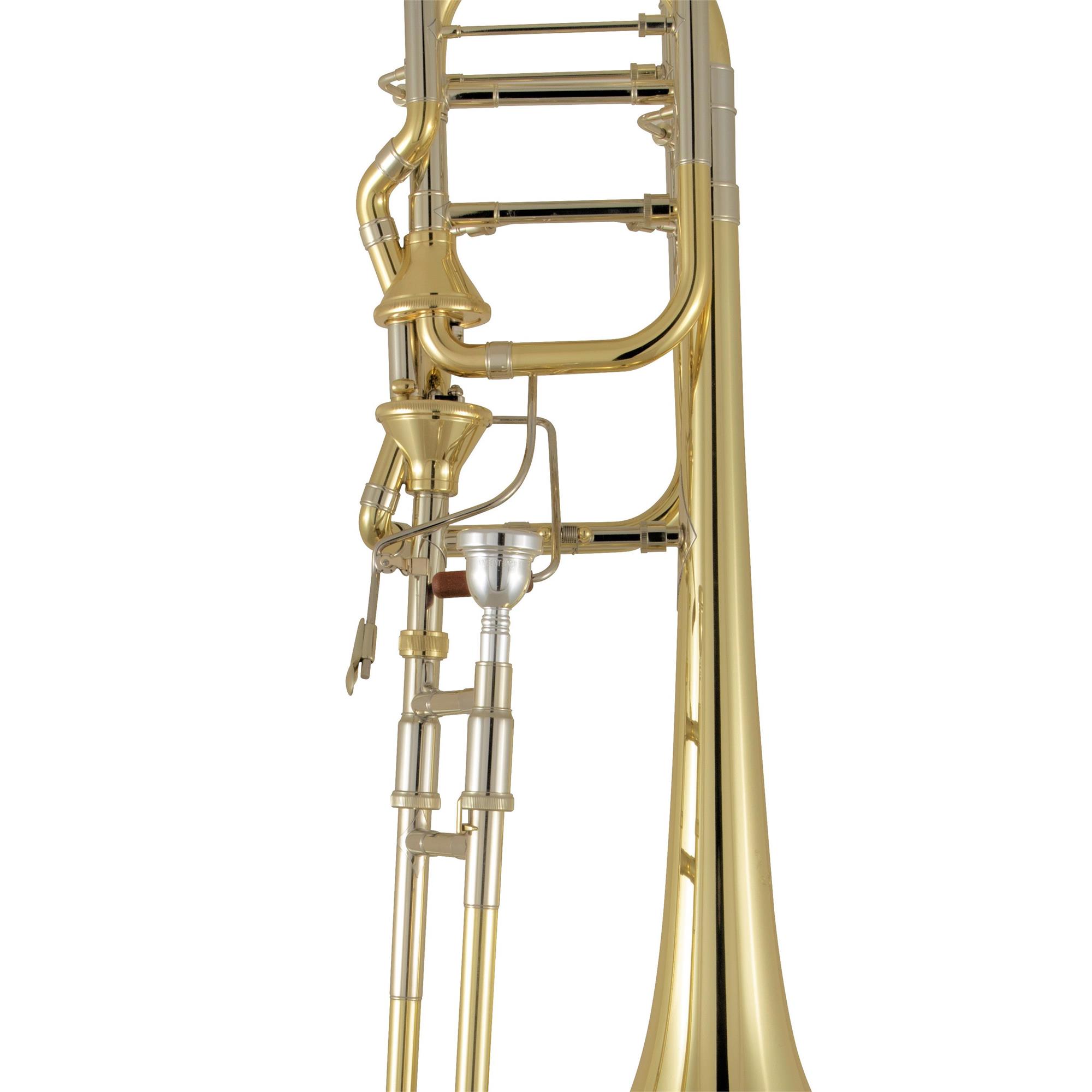
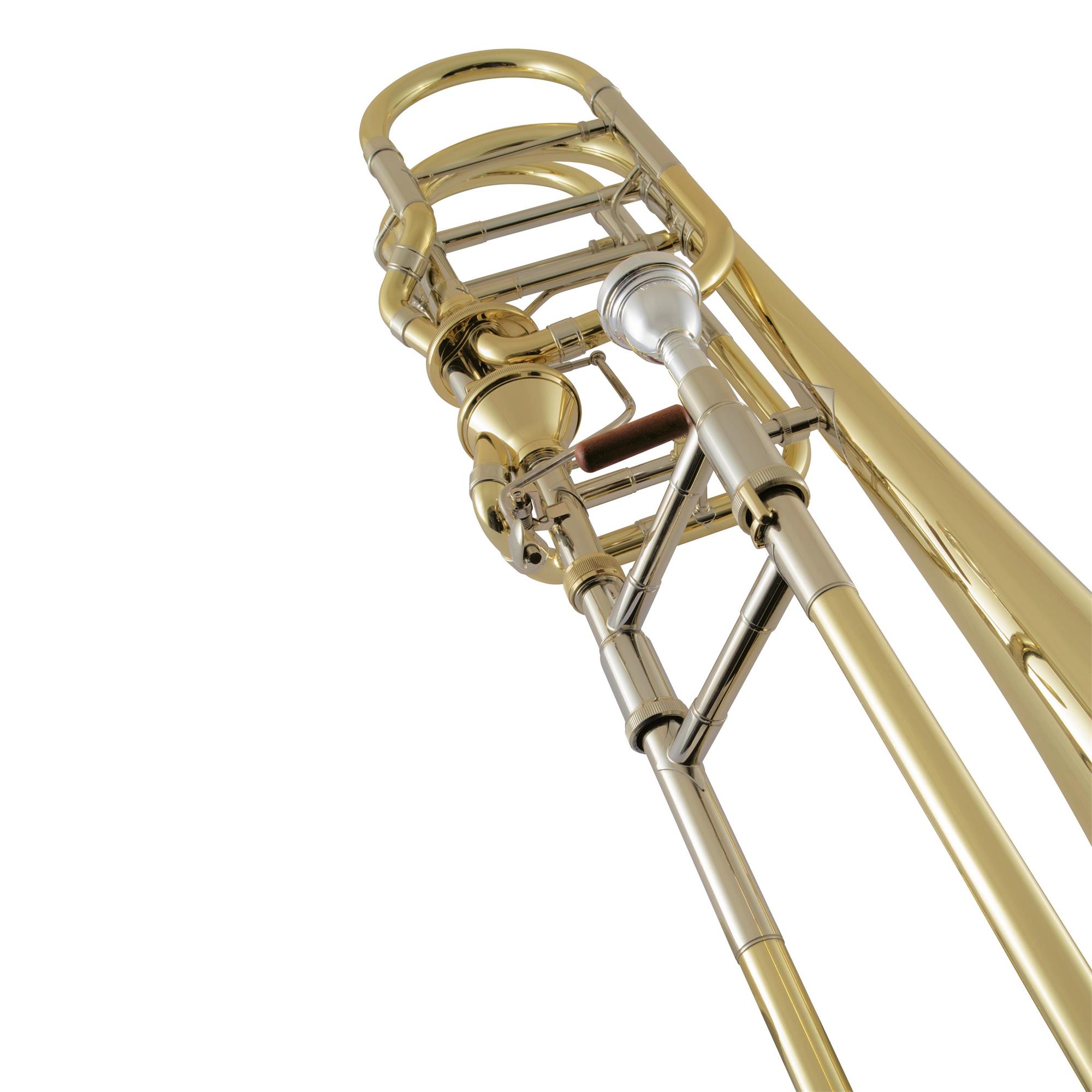
The Bach Stradivarius 50AF3 is a double-rotor bass trombone with open wrap F and G-flat attachments which can be accessed independently using two ‘Infinity’ axial-flow valves (a further refinement of the earlier Thayer valve design).
- Lacquer finish
- Bore size: 0.562 in. (14.27 mm)
- Key of B-flat/F/G-flat
- 9½-inch yellow brass bell
- Double in-line/independent ‘Infinity’ axial-flow* valves
- Open wrap
- Yellow brass outer slide
- Woodshell case
Along with a larger bore and bell diameter, bass trombones are often equipped with a second rotor to extend their low register. There are two double-rotor systems: ‘independent’ and ‘dependent’. An independent system has both rotors sitting side-by-side (or ‘inline’) on the neck-pipe, where they can function alone or in tandem. Dependent models locate the second rotor on the F attachment rather than the neck-pipe, hence the alternative descriptors ‘stacked’ or ‘offset’. In this configuration, use of the second rotor depends on the first rotor being simultaneously engaged.
| Wrap/valve | Bell diameter (inches) | |
|---|---|---|
| 9½ | 10½ | |
| Closed / standard | 50B3 | 50B3L |
| Open / standard | 50B3O | 50B3LO† |
| Open / Hagmann | 50A3 | 50A3L‡ |
| Open / ‘Infinity’ axial-flow* | 50AF3 | 50AF3L |
Other model variants: †LT50B3LOG ‡LT50A3LG
* The axial flow valve began development in the late 1970s as a means of reducing the distortion to the air column created by traditional rotary valves, particularly on trombones. It was the brainchild of engineer Orla Ed Thayer (1920–2009), whose invention (commonly known as the Thayer valve) was first put to the test on a Bach 42B. His revolutionary idea led to further developments in valve technology.
Manufacturer’s website: conn-selmer.eu